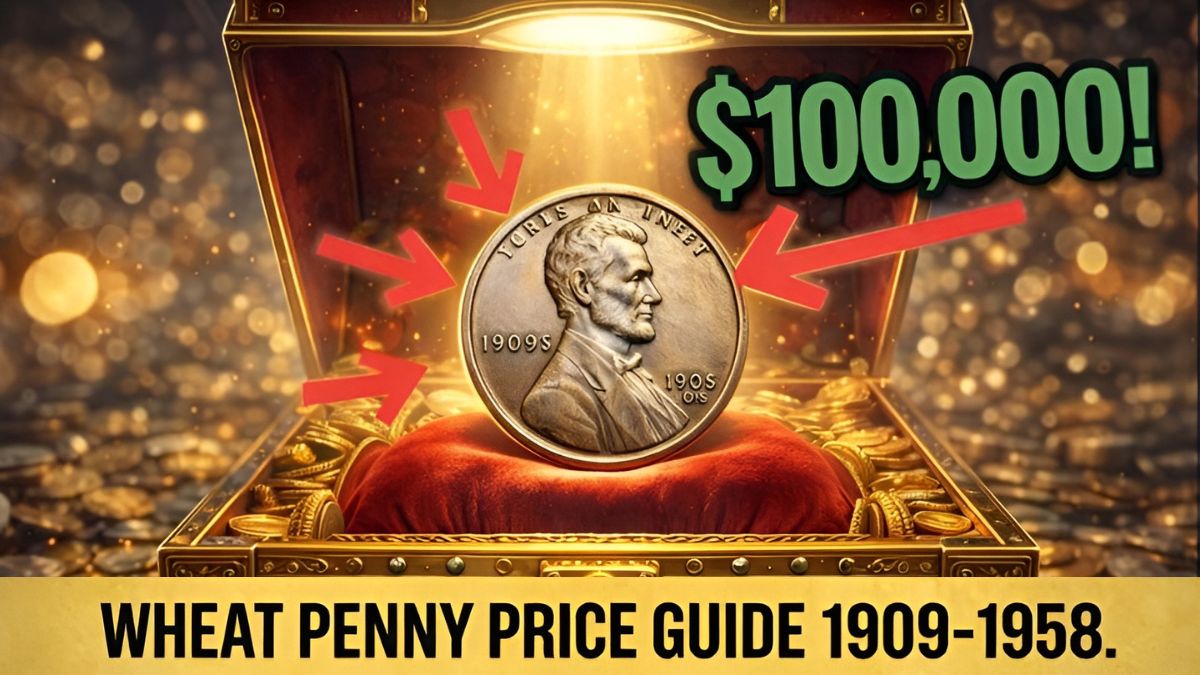
The Wheat Penny, officially called the Lincoln Wheat Cent, remains one of the most popular and widely collected coins in U.S. history. Produced from 1909 to 1958, these small copper coins have fascinated generations of collectors. While many are worth only a few cents, certain rare examples can command thousands—or even tens of thousands—of dollars, depending on their date, mintmark, condition, and errors.



First issued to commemorate the 100th anniversary of Abraham Lincoln’s birth, the Wheat Penny made history as the first U.S. coin to feature a real person rather than a symbolic figure. More than a century later, these coins are no longer just spare change. They’re historical keepsakes, entry-level investments, and prized collectibles with a strong following.
Overview of the Wheat Penny
- Coin Type: Lincoln Wheat Cent
- Years Minted: 1909–1958
- Composition: 95% copper (most years)
- Mints: Philadelphia, Denver, San Francisco
- Estimated Value Range: $0.05 to $100,000+
A Design That Changed U.S. Coinage
The Wheat Penny was designed by Victor David Brenner, whose initials “VDB” famously appeared on early 1909 issues. The front of the coin features Lincoln’s profile, while the reverse shows two wheat stalks, symbolizing prosperity, agriculture, and national growth.


This design marked a major shift in American coinage. Prior to this, U.S. coins relied heavily on allegorical imagery. The Wheat Penny helped set a new standard, paving the way for future coins featuring real historical figures.
Because these pennies circulated for nearly 50 years, they quietly witnessed some of America’s most defining moments—from the Great Depression to World War II and into the post-war era. That deep historical connection is a big reason collectors remain drawn to them today.


Key Dates That Matter Most
Not all Wheat Pennies are created equal. Some dates and mint locations had significantly lower production numbers, making them far more desirable today.
A few standout examples include:
- 1909-S VDB – Extremely limited mintage and widely considered the most valuable Wheat Penny
- 1914-D – Rare in all conditions and highly sought after
- 1922 Plain – A mintmark error that occurred at the Denver Mint
Error coins also play a major role in value. The 1955 Doubled Die Wheat Penny, known for its bold doubled lettering, is one of the most famous and collectible error coins in U.S. numismatics.
Why Condition Makes a Big Difference
Condition, or grade, can dramatically affect a Wheat Penny’s value. A common date coin that’s heavily worn might be worth just a few cents, while the same coin in uncirculated condition could sell for hundreds.
Estimated Wheat Penny Values by Condition
| Coin Type | Circulated | Uncirculated |
|---|---|---|
| Common Dates (1940s–1950s) | $0.05–$0.50 | $3–$25 |
| 1909-S (No VDB) | $500–$1,000 | $3,000+ |
| 1914-D | $300–$1,500 | $10,000+ |
| 1922 Plain | $500–$2,000 | $12,000+ |
| 1955 Doubled Die | $1,200–$3,000 | $25,000+ |
Prices vary based on market demand and professional grading.
Market Trends and Collector Interest
The Wheat Penny market has shown steady, long-term strength, especially for key dates, error coins, and high-grade examples. As more people search through old jars, collections, and estates, interest continues to grow.
Certified coins with low population numbers often perform well at auctions. While most common Wheat Pennies aren’t major investments, rare and well-preserved pieces have consistently held their value and, in many cases, outpaced inflation.
Another advantage? Nostalgia. Wheat Pennies are often the first collectible coin people encounter, making them one of the safest and most accessible entry points into U.S. coin collecting.
Final Thoughts
Wheat Pennies are far more than old cents. They’re tangible pieces of American history with real collector appeal. Whether you’re hunting for a rare key date or simply enjoying the thrill of sorting through change, the 1909–1958 Wheat Penny series offers something for everyone.
With basic research, proper storage, and attention to condition, collecting Wheat Pennies can be both enjoyable and financially rewarding over time.
FAQs
What is the most valuable Wheat Penny?
The 1909-S VDB Wheat Penny is widely considered the most valuable due to its extremely low mintage.
Where is the mintmark located?
The mintmark appears just below the date on the front (obverse) of the coin.
Are Wheat Pennies still worth collecting?
Absolutely. Key dates, error coins, and high-grade examples remain in strong demand and continue to rise in value.
